
Customer Lifetime Value Modeling
Customer Lifetime Value Modeling for Financial Institutions
Customer Lifetime Value Analytics Built on Real Transaction Data
Customer acquisition is only one part of the profitability equation for banks, fintech companies, lenders, and financial institutions. Organizations also need to understand how much value individual customers and customer segments can generate throughout the relationship. Customer Lifetime Value Modeling provides a forward-looking framework for estimating that potential by combining historical customer behavior with retention probability, product adoption, engagement, revenue contribution, and other financial signals. Data Geny helps financial organizations transform customer data into forward-looking intelligence through predictive analytics, machine learning, customer segmentation, personalization, and financial analytics. Our approach to Customer Lifetime Value Modeling helps organizations move beyond measuring current revenue toward understanding the potential long-term value of customer relationships. Current Data Geny material specifically positions lifetime value modeling alongside customer segmentation and personalization as a way to support retention, acquisition, cross-selling, and resource allocation decisions.
Customer Lifetime Value Analytics — Measuring Long-Term Customer Value
Point-in-time profitability metrics can be misleading — a new customer may appear unprofitable in year one due to acquisition cost and onboarding investment, while representing significant long-term value once the full relationship is considered. Conversely, a customer who appears profitable today based on a single product may represent declining value if churn risk is high. We build CLV models that capture this full trajectory, projecting expected revenue, cost-to-serve, and retention probability over a realistic time horizon rather than relying on a single-period snapshot.
This forward-looking view fundamentally changes how institutions should think about acquisition and retention investment — decisions that look reasonable on point-in-time economics often look very different once true lifetime value is properly modeled.

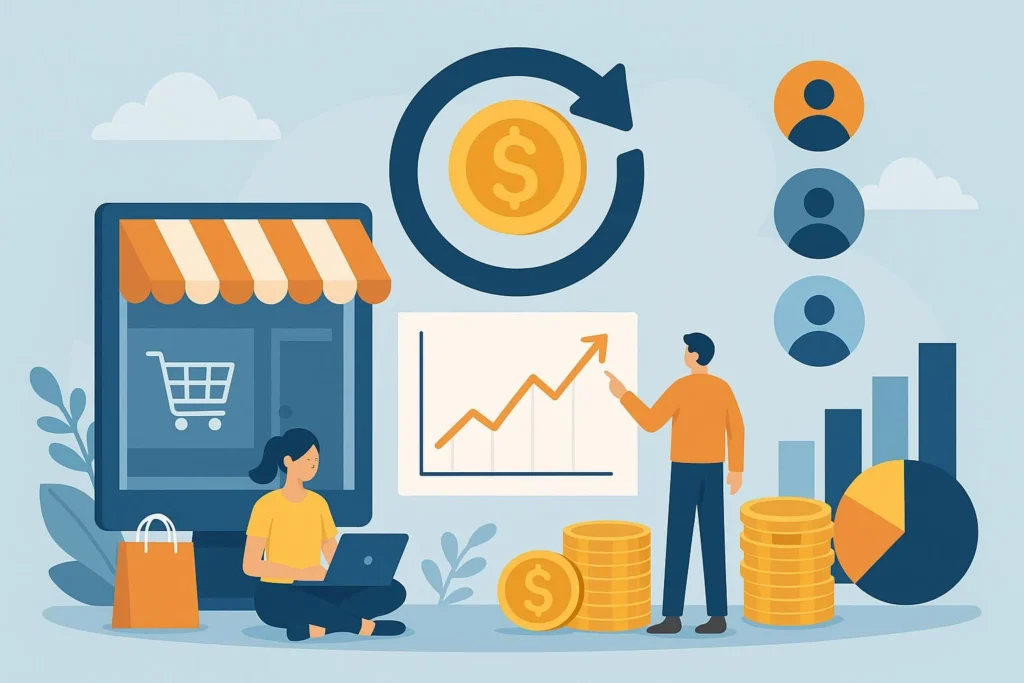
Customer Profitability Analytics for Retention, Growth & Resource Allocation
Understanding customer value requires more than calculating revenue. Customer Profitability Analytics provides a broader view by connecting customer activity with the economic contribution and costs associated with maintaining the relationship. Accurate lifetime value modeling requires more than a simple average revenue projection — it requires modeling the underlying drivers of customer value: product holding patterns, transaction behavior, retention probability, and cost-to-serve, each estimated from actual historical behavior rather than broad assumptions. We build CLV models using survival analysis and predictive modeling techniques that account for the probability a customer relationship continues, rather than assuming a fixed relationship length across the entire customer base.
This modeling work depends on a foundation of clean, integrated customer data. Our Customer Profitability & Behavioral Analytics services provide the underlying profitability and behavioral data infrastructure that CLV models are built on, ensuring lifetime value estimates reflect actual customer economics rather than simplified proxies.
Customer Lifetime Value Prediction for Financial Customer Intelligence
Customer Lifetime Value Prediction uses historical and behavioral information to estimate the potential future value of a customer relationship. Predictive models can identify patterns associated with retention, product adoption, engagement, revenue generation, and changing customer needs.
Our Customer Segmentation & Personalization services build on CLV outputs to create the operational segments used in day-to-day marketing and relationship management decisions, connecting the analytical model to real customer-facing action.
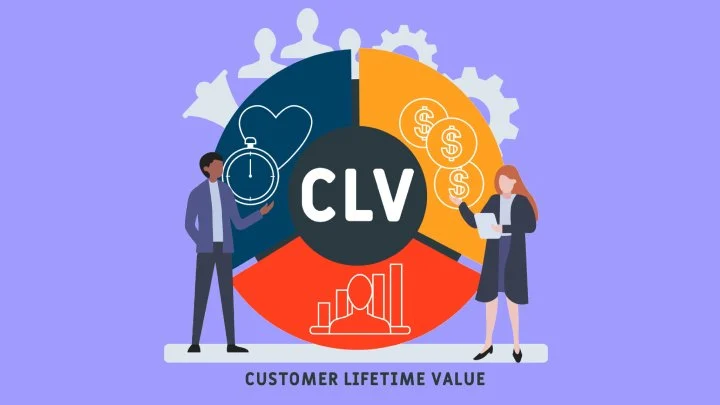
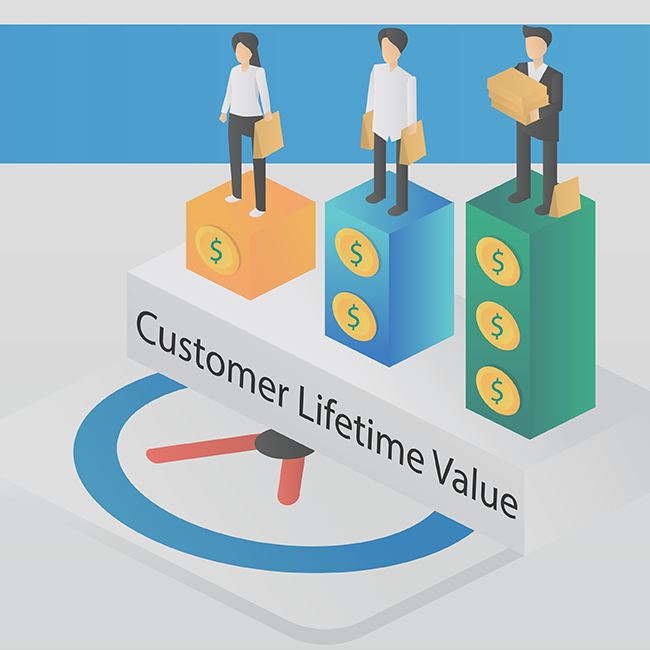
Customer Lifetime Value Modeling for Segmentation, Personalization & Growth
Customer Lifetime Value Modeling becomes more powerful when combined with customer segmentation and personalization. Segmentation identifies groups with similar behaviors or characteristics, personalization determines how individual customers may best be engaged, and lifetime value modeling provides a forward-looking perspective on where those strategies may create long-term financial value.
This connects naturally to cross-sell and growth strategy. Our Cross-Sell & Upsell Revenue Analytics services use lifetime value signals to prioritize which existing customers represent the strongest growth opportunity, focusing relationship expansion efforts where they will generate the most durable return.
Our Approach to Customer Lifetime Value Modeling
Our approach to Customer Lifetime Value Modeling begins with understanding the organization’s customer data environment, business objectives, profitability drivers, customer lifecycle, and existing analytics capabilities. We identify the customer behaviors and financial signals that can contribute to an accurate view of future relationship value.
We then connect data engineering, customer analytics, predictive modeling, machine learning, visualization, and governance into a practical analytical framework. The objective is to create lifetime value intelligence that can be integrated into customer strategy, relationship management, marketing, retention, and financial decision-making.


Customer Lifetime Value Analytics — From Customer Behavior to Financial Value
Effective Customer Lifetime Value Analytics connects customer behavior with financial outcomes. Transaction frequency, product usage, engagement, retention patterns, customer profitability, and other behavioral signals can help explain why some customer relationships may generate greater long-term value than others.
Data Geny uses predictive analytics and customer intelligence to transform these signals into actionable insights. Current Data Geny material describes the combination of customer segmentation, personalization, and lifetime value modeling as a connected approach for improving retention, acquisition, cross-selling, resource allocation, and long-term financial value.
Customer Profitability Analytics for Retention & Cross-Sell Decisions
Customer Profitability Analytics can help financial organizations determine where customer relationships are creating value and where additional engagement may be appropriate. By connecting customer profitability with lifetime value and behavioral signals, institutions can identify opportunities for retention, cross-selling, upselling, and personalized product recommendations.
Customer analytics can also help organizations distinguish between customers who generate short-term revenue and customers with stronger long-term potential. This creates a more comprehensive foundation for customer strategy than revenue reporting alone.

Customer Lifetime Value Prediction — Monitoring, Validation & Continuous Improvement
Customer Lifetime Value Prediction should be continuously evaluated as customer behavior, economic conditions, product offerings, and engagement patterns change. A model developed from historical customer data may require monitoring as the underlying population and behavioral relationships evolve.
Data Geny supports a lifecycle approach in which predictive customer models can be monitored, evaluated, and refined as new information becomes available. This is consistent with Data Geny’s broader emphasis on model governance, real-time analytics, data quality, and production-ready predictive intelligence.
Customer Lifetime Value Modeling — Data Integration, Governance & Enterprise Decision-Making
Customer Lifetime Value Modeling depends on reliable customer data, scalable analytical infrastructure, appropriate governance, and integration with business workflows. Customer information may span transaction systems, digital interactions, product platforms, engagement channels, and operational systems, making data integration an essential component of customer intelligence.
Data Geny combines customer analytics with data engineering, machine learning, predictive analytics, real-time processing, business intelligence, and governance capabilities. This enables financial organizations to build customer intelligence environments that are scalable, explainable, and connected to actual business decisions. Current Data Geny material emphasizes data quality, governance, privacy, model governance, and real-time processing as important foundations for trustworthy customer analytics.