
Real-Time Data Processing
Real-Time Data Streaming for Banks and Fintech Companies
Streaming Analytics for Finance, From Ingestion to Action
Real-Time Data Streaming for Banks replaces overnight batch jobs with continuous data flow. Batch processing, updating data once a day or once an hour, is no longer fast enough for many of the decisions financial institutions need to make. Fraud needs to be caught in the milliseconds between a transaction being initiated and authorized. Trading decisions depend on market data that is seconds old, not hours old. Customer experience increasingly depends on systems responding to behavior as it happens. At Datageny, our Real-Time Data Processing services help financial institutions build streaming data infrastructure that processes and acts on data as it is generated, enabling use cases that batch processing simply cannot support. Data Geny helps financial institutions build real-time data processing capabilities that transform fragmented, delayed data environments into continuously adaptive operational intelligence systems capable of supporting AI, fraud detection, customer analytics, compliance monitoring, and enterprise decision-making at scale.
Low-Latency Data Pipelines Built for Fraud and Trading Use Cases
Batch processing works well for reporting and analysis where a delay of hours or a day is acceptable, but it fundamentally cannot support use cases where the value of a data point decays quickly — fraud detection, real-time risk monitoring, live customer personalization, and operational alerting all lose most or all of their value if the underlying data is stale by even a few minutes. We help institutions identify which use cases genuinely require Low-Latency Data Pipelines versus which are better served by more cost-effective batch or micro-batch approaches, since building unnecessary real-time infrastructure adds cost and complexity without proportional benefit.
This selective approach ensures real-time investment goes toward the use cases where speed genuinely changes outcomes, rather than applying real-time architecture indiscriminately across the data estate.


Building Streaming Data Architecture With Event-Driven Architecture
We design and build streaming data architectures using technologies such as Apache Kafka, Apache Flink, and cloud-native streaming services, architected to handle the throughput, latency, and reliability requirements specific to financial services workloads. This includes designing for exactly-once processing semantics where data accuracy is critical, and building in the fault tolerance needed to ensure streaming pipelines remain reliable even as they process the continuous, high-volume data flows financial institutions generate.
Our Cloud-Native Data Platform Architecture services provide the broader cloud infrastructure within which streaming architecture operates, ensuring real-time processing capability is built on infrastructure designed to scale elastically with demand. We design Event-Driven Architecture and Low-Latency Data Pipelines for time-sensitive use cases.
Real-Time Fraud Detection and Transaction Monitoring
One of the highest-value applications of real-time processing in financial services is Real-Time Fraud Detection at the point of transaction — evaluating risk signals and scoring a transaction before it is authorized, rather than flagging fraud after the fact when funds have already moved. We build real-time scoring pipelines that evaluate transactions against fraud models within the latency constraints payment authorization requires, balancing detection accuracy against the strict speed requirements of live transaction processing.
Our Fraud Detection & Anomaly Analytics services provide the underlying detection models that these real-time pipelines execute, ensuring fraud scoring logic is both accurate and fast enough for production transaction flows. The same infrastructure powers Real-Time Fraud Detection data feeds and broader streaming data infrastructure initiatives.

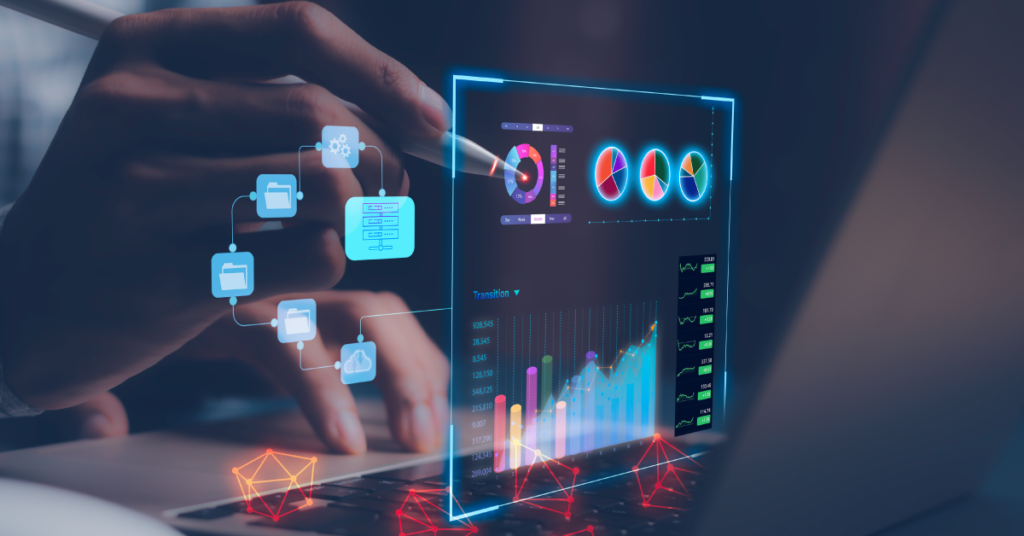
Real-Time Fraud Detection & Risk Intelligence
Fraud ecosystems increasingly evolve faster than traditional analytical and operational review environments can respond. Suspicious activity patterns emerge dynamically across payments, account access, transaction behavior, customer interactions, and digital engagement channels within seconds rather than hours or days. We help organizations build real-time fraud and risk intelligence capabilities that combine streaming analytics, event-driven processing, AI-assisted anomaly detection, operational observability, and governance controls into continuously adaptive enterprise protection environments. This includes real-time transaction monitoring, behavioral anomaly detection, streaming fraud analytics, operational alerting systems, AI-assisted escalation environments, and adaptive risk intelligence architectures.
Low-Latency Data Pipelines for Operational Awareness
Beyond fraud, real-time processing supports operational use cases like live system monitoring, real-time transaction volume tracking, and immediate alerting when key operational metrics move outside expected ranges. We build real-time analytics pipelines, powered by Low-Latency Data Pipelines, that feed directly into operational dashboards, giving business and technology teams live visibility into system and process health rather than relying on periodic reports that may be hours out of date by the time an issue is identified.
Our Operational KPI & Performance Analytics services incorporate these real-time feeds directly into the dashboards operational teams monitor, closing the gap between an issue occurring and a team becoming aware of it.

Event-Driven Architecture for Operational Intelligence & Observability
As financial operations become increasingly digital and interconnected, organizations need continuous visibility into operational conditions, workflow performance, customer interactions, infrastructure health, servicing environments, and enterprise risk exposure. Traditional reporting architectures designed around delayed dashboards increasingly fail to support the operational responsiveness modern institutions require.
We help organizations design real-time operational intelligence and observability capabilities, built on Event-Driven Architecture, that combine streaming monitoring, event analytics, operational telemetry, AI-assisted anomaly detection, workflow observability, and governance oversight into continuously adaptive enterprise intelligence environments.
Institutions That Operationalize Real-Time Data Streaming for Banks Will Define the Next Phase
Financial institutions are entering a period where operational competitiveness increasingly depends on the ability to process, govern, and operationalize enterprise data continuously rather than retrospectively. Customer expectations now evolve in real time. Fraud ecosystems adapt dynamically. AI systems require continuously updated operational intelligence. Regulatory expectations around operational resilience and observability continue to expand.
Organizations still relying primarily on overnight processing cycles and fragmented batch architectures will struggle against competitors capable of operationalizing Real-Time Data Streaming for Banks. The gap between institutions operating in real time and those still dependent on delayed operational visibility is likely to widen significantly over the next several years.

Event-Driven Architecture on Cloud-Native Infrastructure
If fraud monitoring still depends heavily on delayed alerts, if operational teams lack real-time visibility into enterprise conditions, or if AI systems struggle because operational data arrives too slowly, the issue is not simply infrastructure latency. It is a capability gap in how enterprise intelligence supports operational execution across the institution. Our real-time data processing assessment provides a structured view of where latency bottlenecks exist, where governance and observability gaps remain, and what changes are required to build a scalable, AI-ready real-time intelligence capability for your institution.Real-time data processing unlocks a category of use cases — fraud prevention, live risk monitoring, immediate operational awareness — that batch processing structurally cannot support, regardless of how frequently batches run. At Datageny, our Real-Time Data Processing services help financial institutions build streaming infrastructure that is fast, reliable, and appropriately balanced against data quality needs. Contact us today to explore how real-time processing can support your most time-sensitive decisions.