
Financial organizations have access to enormous amounts of customer information, including transaction histories, product usage, engagement patterns, digital interactions, demographic attributes, and behavioral signals. The challenge is turning this information into decisions that improve profitability.
Traditional customer reporting can show what customers purchased or how frequently they interacted with a service. However, modern analytics can go much further. Organizations can identify which customers are most likely to respond to an offer, which customers may leave, which products they are likely to need next, and which relationships have the greatest long-term value.
This is where advanced customer analytics becomes strategically important. Instead of relying on broad customer categories, financial organizations can use sophisticated models to understand customers at a much deeper level.
Customer Segmentation Analytics: Understanding Who Your Customers Really Are
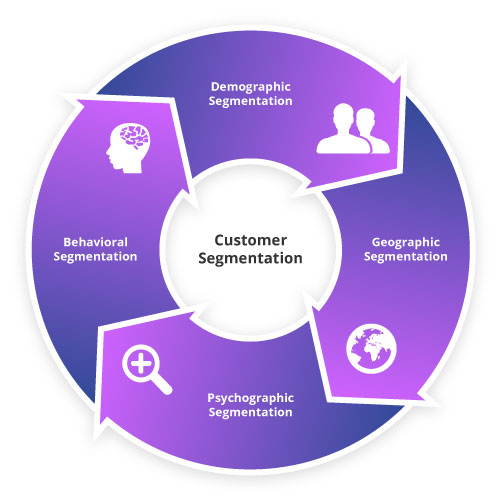
Customer Segmentation Analytics enables organizations to divide their customer base into meaningful groups based on behaviors, characteristics, financial activity, preferences, and predicted needs.
Traditional segmentation might classify customers based on age, location, or income. Modern analytics introduces far more sophisticated dimensions. Machine learning algorithms can identify behavioral patterns across thousands or millions of customer records and uncover groups that may not be obvious through conventional analysis.
For example, a financial institution could identify customers who frequently use digital banking services but have limited investment products. Another segment could consist of customers with strong account balances but declining engagement. A fintech company might discover a group of highly active users who are particularly receptive to premium services.
These insights enable organizations to develop strategies specifically for each segment rather than applying the same marketing approach to everyone.
Data Geny supports financial organizations with advanced analytics capabilities designed around these kinds of customer intelligence challenges. By combining data engineering, machine learning, and financial analytics, customer data can become a foundation for more precise business decisions.
Personalization Analytics Makes Customer Experiences More Relevant
Segmentation explains who customers are Personalization Analytics helps organizations determine what each customer is most likely to need or respond to.
Personalization is becoming increasingly sophisticated as artificial intelligence and real-time analytics mature. Instead of simply recommending products based on previous purchases, organizations can analyze multiple signals to understand changing customer behavior.
A customer who regularly transfers money internationally may have different needs from someone primarily using a savings account. A customer showing increased interest in investment content may be approaching a different financial stage. Identifying these signals can help organizations provide more relevant recommendations and communications.
Modern personalization strategies can use predictive models to determine the next best action for individual customers. These models may consider historical behavior, recent interactions, product usage, engagement frequency, and other relevant signals.
The result is a more intelligent customer experience in which recommendations are based on data rather than assumptions.
Customer Lifetime Value Modeling Shifts the Focus to Long-Term Growth
Acquiring a customer is only one part of the profitability equation. Financial organizations also need to understand how much value a customer could generate throughout the relationship.
Customer Lifetime Value Modeling provides a framework for estimating the future economic value of customer relationships. Rather than evaluating customers solely according to their current revenue, organizations can consider expected future activity, retention probability, product adoption, engagement, and other factors.
This changes the way businesses prioritize their customer strategies.
A customer who currently generates modest revenue may have significant long-term potential. Conversely, a customer producing high short-term revenue may have a high probability of leaving. Predictive lifetime value models can help organizations distinguish between these situations.
Data Geny’s predictive analytics capabilities can support organizations in developing models that turn customer behavior into forward-looking intelligence. These models can help leadership teams make more informed decisions about retention, acquisition, cross-selling, and resource allocation.
Combining Segmentation, Personalization, and Lifetime Value
The greatest opportunity comes when these three analytics capabilities operate together.
Customer segmentation identifies distinct groups. Personalization determines how to engage those groups or individuals. Lifetime value modeling helps organizations understand where those efforts can generate the greatest long-term financial return.
Consider a financial institution with thousands of customers. Analytics could identify a segment of customers with strong engagement and growing balances. Lifetime value modeling could determine that this group has significant future potential. Personalization analytics could then identify investment products, financial services, or educational content that are most relevant to individual customers.
Instead of sending generic campaigns to the entire customer base, the organization can prioritize the customers and experiences most likely to produce meaningful results.
This approach can improve marketing efficiency while creating a more relevant customer experience.
AI and Machine Learning Are Accelerating Customer Analytics
Artificial intelligence is transforming how customer analytics is performed. Modern machine learning models can process complex datasets and identify relationships that may be difficult to detect through traditional reporting.
Predictive models can support churn prediction, customer segmentation, recommendation engines, customer profitability analysis, and behavioral forecasting.
At Data Geny, machine learning and AI are central components of its analytics approach. The company develops solutions that connect predictive models with real business workflows rather than treating analytics as isolated experiments.
This production-focused approach is particularly important for financial organizations, where models need to be reliable, scalable, explainable, and aligned with governance requirements.
Real-Time Analytics Enables Timely Customer Decisions
Customer behavior can change quickly. A segmentation model based entirely on historical information may become less useful when customer circumstances change.
Real-time data processing allows organizations to incorporate recent transactions, interactions, and behavioral signals into customer intelligence systems. This creates opportunities for more responsive personalization and decision-making.
For example, a change in customer activity could trigger a retention strategy, a relevant product recommendation, or an updated risk assessment. Instead of waiting for monthly reports, organizations can respond while the behavior is still relevant.
Data Geny’s Data Engineering & Integration and Real-Time Data Processing capabilities provide the infrastructure needed to connect multiple data sources and make timely analytics possible.
Data Quality and Governance Remain Essential
Advanced customer analytics is only as reliable as the data behind it. Inconsistent records, duplicated customer profiles, missing information, or poorly governed data can negatively affect model performance and business decisions.
Financial organizations therefore need strong data governance alongside analytics. Data quality management, privacy controls, model governance, and monitoring should be integrated into the analytics lifecycle.
Data Geny approaches analytics with financial-sector requirements in mind, incorporating governance, security, compliance, and scalability into its solutions. This helps organizations build customer intelligence systems that are not only powerful but also trustworthy and sustainable.
Measuring the Business Impact
The purpose of customer analytics is not simply to create sophisticated models. The real objective is measurable business improvement.
Organizations can evaluate the impact of segmentation and personalization through metrics such as customer retention, conversion rates, cross-sell performance, customer profitability, engagement, acquisition costs, and lifetime value.
By connecting analytics directly to business outcomes, leadership teams can determine which strategies are creating value and continuously improve them.
Data Geny: Building Intelligence Around Financial Customers
Data Geny focuses specifically on analytics and AI solutions for banks, fintech companies, lenders, and financial institutions. Its capabilities span Customer Segmentation & Personalization, Customer Lifetime Value Modeling, Predictive Analytics & Forecasting, Machine Learning & AI Solutions, Data Engineering & Integration, Business Intelligence & Visualization, and Risk, Fraud & Compliance Analytics.
This finance-specific approach enables organizations to move beyond generic analytics and develop customer intelligence solutions aligned with financial workflows and strategic objectives.
The goal is straightforward: transform complex financial and customer data into intelligence that leaders can use.
Conclusion
Customer expectations and competitive pressures are making intelligent customer analytics increasingly important for financial organizations. Customer Segmentation Analytics helps businesses understand distinct customer groups, Personalization Analytics enables more relevant experiences, and Customer Lifetime Value Modeling provides a forward-looking view of relationship profitability.
When combined with AI, machine learning, real-time processing, strong data engineering, and enterprise governance, these technologies can create a powerful foundation for sustainable growth.
Data Geny helps financial organizations turn these capabilities into practical, production-ready analytics solutions. By connecting customer intelligence with predictive decision-making, organizations can improve engagement, strengthen retention, identify new revenue opportunities, and build customer relationships that generate value well beyond the next transaction.